
Eastbourne gets £1m to bring derelict buildings back into use, and the council must ask residents which ones before the end of 2026. What it can pay for.
Eastbourne has been given £1 million from a new government fund to bring empty and derelict buildings back into use. The town is one of 60 council areas in England picked for the £125 million Derelict Buildings Fund, published on Wednesday 28 October, Budget day.
The allocation is set out in the Ministry of Housing, Communities and Local Government’s methodology note for the fund. Hastings gets the same amount. They are the only two Sussex council areas on the list.
No building has been chosen yet. The government’s interim guidance says the council has to ask residents which buildings matter most before it decides. That engagement is due to start by the end of this year.
The quick answer
- How much: £1.00 million for Eastbourne, a mix of capital and revenue grant.
- Why Eastbourne: the 60 areas were chosen for having the highest employment deprivation in England.
- What it can buy: empty shops, offices, department stores, pubs, theatres, cinemas, former churches and other heritage buildings.
- Who decides: Eastbourne Borough Council, after asking residents. The local MP is named as a “Programme Champion” who may back particular projects.
- When: consultation and a shortlist by the end of 2026, the first delivery money from April to June 2027, and the fund runs until 2030.
How the £1 million was worked out
The government used the employment part of the Index of Multiple Deprivation to rank council areas. It took the 60 with the highest scores, after leaving out six big cities that are getting separate City Densification Funding.
The money was then shared out by population. Each area was guaranteed at least £1 million and capped at £3 million. Of the £125 million, £120 million goes straight to councils and £5 million is kept back for specialist help.
Eastbourne’s population share came to less than £1 million, so it was lifted to the floor. Nine of the 60 areas sit on that £1 million floor, including Hastings, Burnley and Great Yarmouth. Bradford, Leicester, Nottingham and eight others get the full £3 million.
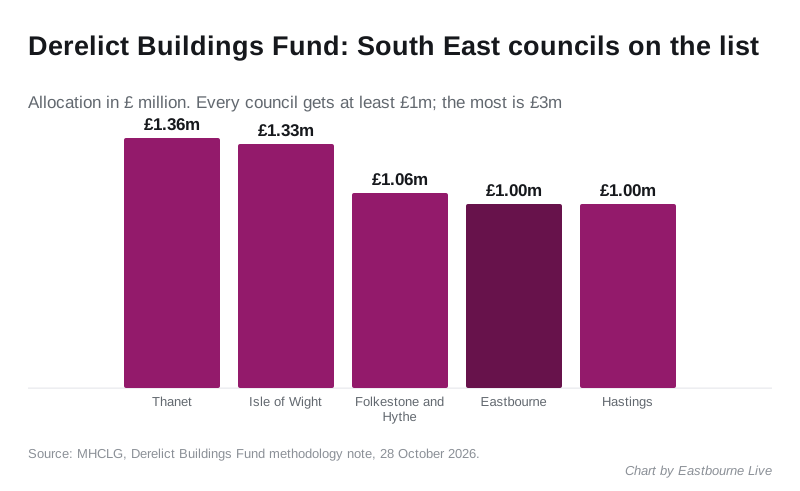
In the South East, the other areas on the list are:
- Thanet, £1.36 million
- the Isle of Wight, £1.33 million
- Folkestone and Hythe, £1.06 million
- Hastings, £1.00 million
What the money can be spent on
The guidance says the fund is for “prominent long term vacant or derelict buildings” that drag down a high street or neighbourhood. It names the kinds of building it has in mind:
- shops and offices
- department stores
- pubs
- theatres and cinemas
- former places of worship and other heritage buildings
The money can pay to buy a building, restore it, sort out the problems that have stalled it, or close the gap when a scheme does not quite pay for itself. The council does not have to own the building. The guidance also encourages community and co-operative ownership where it fits.
Buildings on high streets and in town or district centres come first. A building elsewhere can qualify if it serves a neighbourhood or stands on a busy main road as a gateway. The future use is up to the council: community, cultural, commercial, public service or a mix.
Which Eastbourne buildings might be in the running
The council has not named any, and has not published a statement on the fund on its news page as of Saturday morning.
The guidance asks councils to focus on buildings the community feels “bring down the area”, attract vandalism or hold back other development. Several empty town centre sites are already allocated for new uses in the council’s draft Local Plan, which we covered when the final consultation opened:
| Draft Local Plan site | Area | Homes proposed |
|---|---|---|
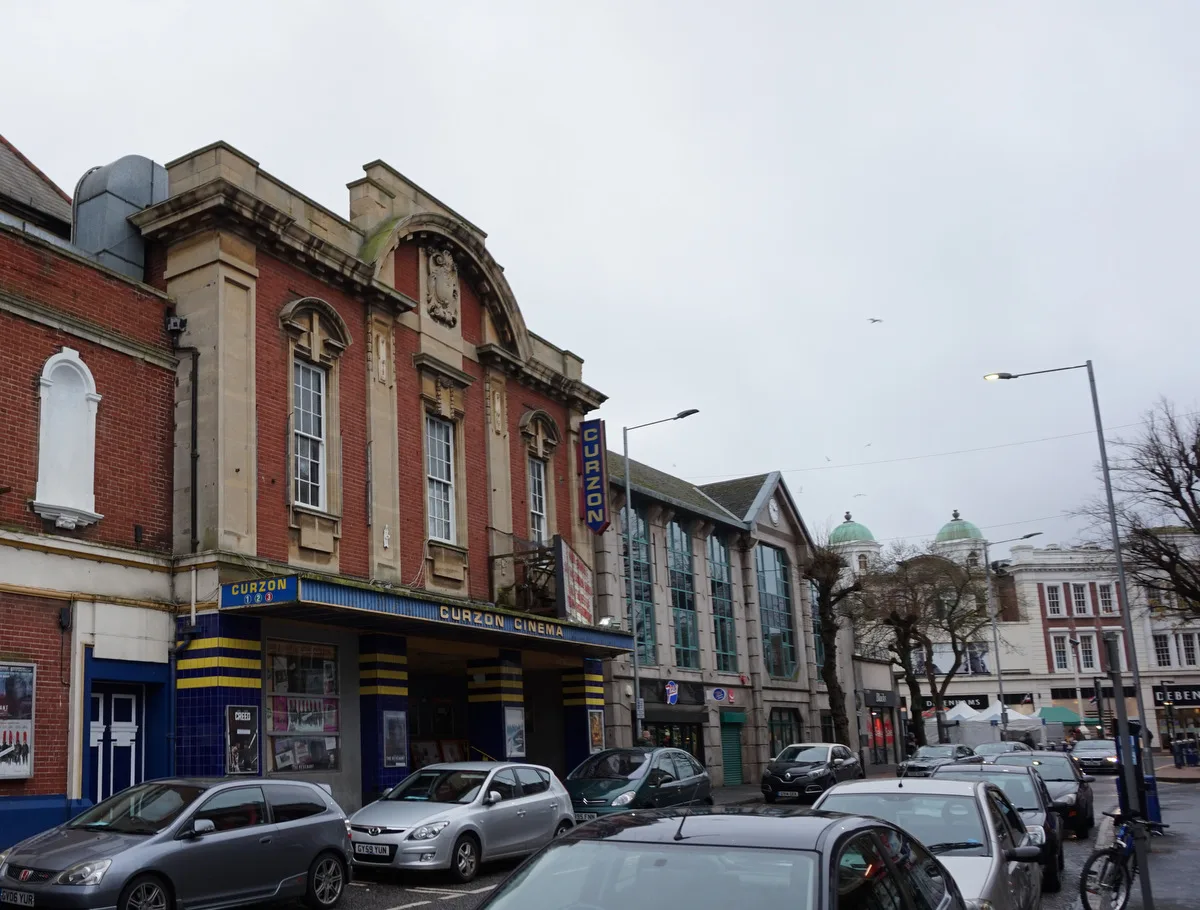
| Former Curzon Cinema, Langney Road (SA05) | Town Centre | 30 |
| Former Claremont Hotel, Grand Parade (SA09) | Town Centre | 65 |
| Land at 2-4 Moy Avenue (SA14) | Roselands and Bridgemere | 36 |
Being in the Local Plan does not mean a site will get money from this fund. Those allocations are about what can be built, not who pays for it.
The timetable
The guidance sets out these dates:
| When | What happens |
|---|---|
| October 2026 | Allocations announced and interim guidance published |
| By end of 2026 | Council starts asking residents and draws up a longlist of buildings |
| By end of 2026 | Council signs a memorandum with the government and gets its first revenue money |
| By April 2027 | First progress report to the government, including the community engagement done |
| April to June 2027 | First delivery payment, if the report shows plans are on track |
| Autumn 2027 | Update on how the projects are going |
| To 2030 | The fund runs until 2030 |
The council does not have to get the government to approve its project plans before it spends. Instead it reports every six months. More detailed guidance on funding profiles and delivery is due from the government later this year.
What it means for you
If there is an empty building in Eastbourne you would like to see brought back into use, this is the point to say so. The guidance says residents should be involved “before key choices about projects and potential uses have been made”, and that councils should explain afterwards why ideas were not taken forward.
The council has not yet said how it will ask. We will report the consultation when it opens. Planning decisions on the town’s empty sites are tracked on our Eastbourne planning news page.
£1 million is unlikely to rescue more than one large building. The guidance leaves it to each council to choose between one “statement project” and several smaller ones.
The MP’s role
The guidance names each area’s MP as a “Programme Champion” who “may choose to endorse specific projects”. In Eastbourne that is the Liberal Democrat MP, Josh Babarinde. The council remains the accountable body for the money and is told to keep that role separate from any interest it has as a landlord or owner of buildings in the running.
Have your say